

HRT for Weight Gain in Frisco, TX | Belly Fat & Hormone Imbalance
HRT for Weight Gain in Frisco, TX
If you are doing everything right and still not losing weight in Frisco, TX, it is not a problem of discipline, it is a problem that is going on within your cells and cannot be solved by diet or exercise alone.
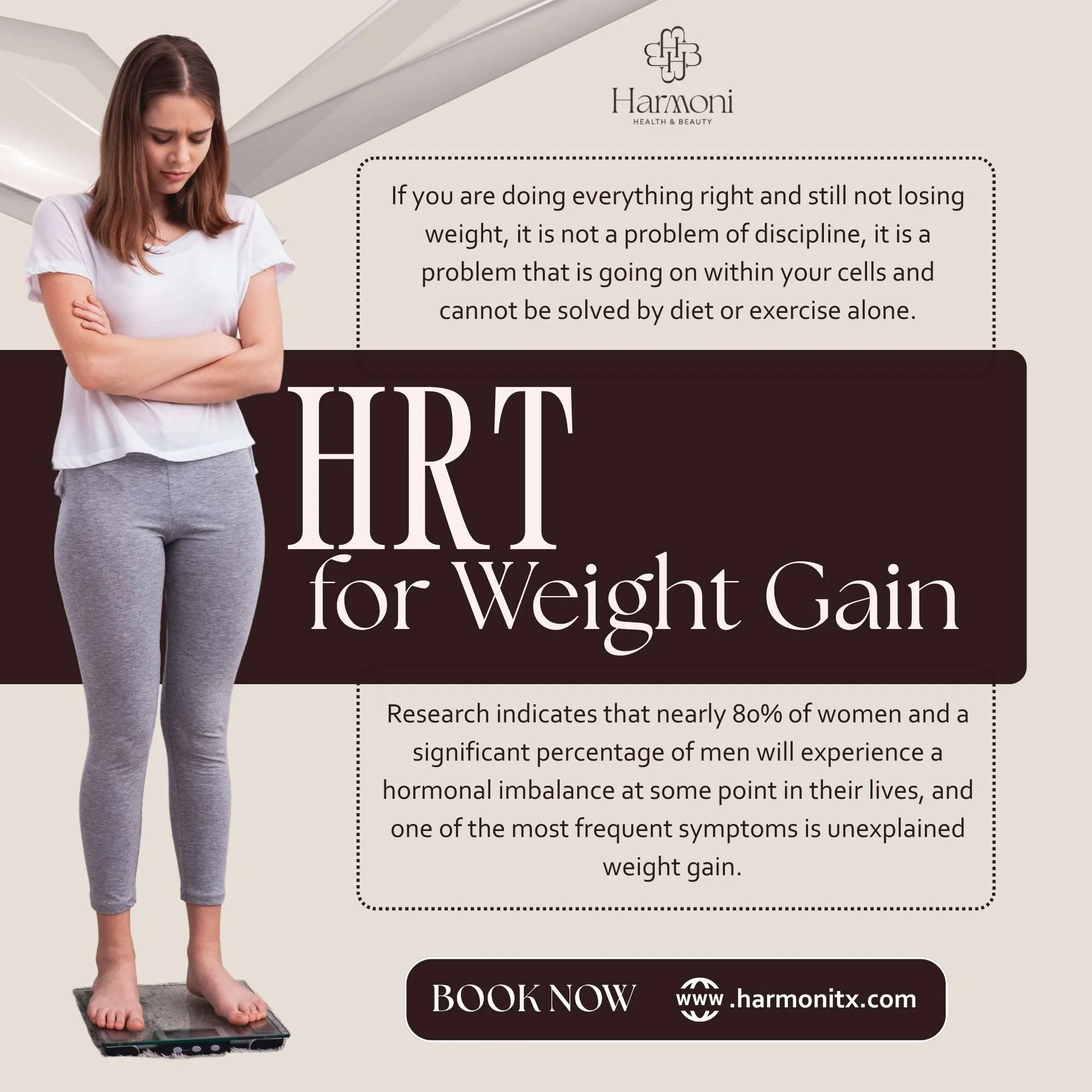
Research indicates that nearly 80% of women and a significant percentage of men will experience a significant hormonal imbalance at some point in their lives, and one of the most frequent symptoms is unexplained weight gain.
When hormones like estrogen, testosterone, or active thyroid drop, your metabolism essentially pumps the brakes. Your body perceives the drop in hormones as a crisis signal and begins storing fat.
Understanding HRT for weight gain is simply acknowledging fact that you can't out-diet a broken metabolic engine, you must fix what is broken.
HRT for Weight Gain in Frisco, TX: When Weight Changes Come With Other Hormone Clues
When you ask about hormone replacement therapy HRT for weight gain in Frisco, TX, the real conversation goes much deeper than a number on a scale. Your hormones work as a team — when one drops, others tend to follow, and symptoms can pile up fast.
If you've put on 10 or 15 pounds within a year and you also wake up sweating, experiencing joint pain, or not recovering early from workouts, those are not separate issues.
They are all chapters in the same story. Your provider should know when these changes began to determine if your weight gain is the primary concern or if there is something more going on metabolically.
Hormone Imbalance Weight Gain: When the Scale Changes but Your Habits Do Not
Many people struggle with the way their body uses energy as they age. When you were 25, you could eat a little less for a week and easily lose a few pounds. At 45, that same approach might do absolutely nothing. This is because lower hormone levels mean your body burns less energy to get through the day.
Additionally, insulin resistance often develops around this age. Foods that your body handled easily at 30 can now cause your blood sugar to spike and are quickly turned into fat. It can be really frustrating for people who carefully track their calories and eat healthily but still gain weight. This makes sense when you consider how your body works.
If your thyroid and sex hormones are not at the right levels, your body won’t use fat for energy. Instead, it breaks down muscle and stores fat. To fix this issue, you need to change your body’s internal environment, not just eat less.
Hormone Replacement Therapy for Weight Gain: What It Can and Cannot Do
One of the biggest misunderstandings out there is assuming HRT works the same way weight loss medications like semaglutide does. It doesn't. HRT isn't targeting your fat cells directly or actively shrinking your waistline. What it does is to rebuild the metabolic groundwork that makes fat loss actually possible.
When estrogen or testosterone is brought back to a healthy range, your body holds onto lean muscle more effectively — and muscle is what keeps your calorie burn rate elevated throughout the day. It also helps your cells respond to insulin more efficiently, which makes you far less likely to store what you eat as belly fat.
That said, HRT works as a partner in your weight loss journey. Patients who get HRT to balance their hormones but keep eating poorly and sitting still won't see dramatic changes on the scale. You need to follow a healthy lifestyle practice to see real changes.
Weight Gain During Perimenopause or Menopause: Why the Midsection Often Changes First
A lot of women entering perimenopause often notice weight gain around the midsection, in a way that feels completely different from any weight gain they've experienced before.
Estrogen has always played a role in directing where fat gets stored, historically steering it toward the hips and thighs. Once ovarian function starts winding down, the body realizes it can produce a weaker form of estrogen from fat cells — particularly the deep visceral fat that collects around the organs.
So, it starts accumulating that fat on purpose, as a kind of backup system. The problem is that visceral fat is highly inflammatory and doesn't budge with standard cardio.
The clinical approach focuses on restoring enough hormonal stability that the body no longer needs to rely on fat cells for estrogen production.
HRT in Frisco, TX: When Weight Gain Comes With Brain Fog, Low Libido, Mood Changes, or Poor Sleep
Gaining weight is a tough situation to handle. For many people in Frisco, TX, who are thinking about hormone replacement therapy (HRT) in Frisco, TX, weight is just one part of a bigger problem. Sleep falls apart, thinking feels foggy, mood swings can happen suddenly, and the desire for intimacy can fade away quickly. All these issues often come from the same source.
When sex hormones decrease, the stress hormone (cortisol) gets out of control. This disrupts your ability to get deep, restful sleep. When you don’t sleep well, your hunger hormones can get messed up.
Ghrelin, which makes you feel hungry, increases, and leptin, which helps you feel full, decreases. By treating the main hormone shortage, you can stop this cycle.
Getting better sleep allows your body to repair itself at night and helps regulate your appetite the next day, making everything else easier to handle.
Hormone Consultation in Frisco, TX: What Should Be Checked Before Blaming Weight Gain on Hormones
Hormone consultation starts with thorough blood work, because guessing in endocrinology can be harmful. Most standard annual physicals only run a TSH check with a reference range so broad that plenty of symptomatic people come back with "normal" results and get sent home without answers.

A proper workup looks at Free T3, Free T4, estradiol, progesterone, total and free testosterone, DHEA, and fasting insulin. Providers need to know whether the thyroid is failing to convert inactive T4 into usable T3, or whether insulin resistance is blocking cells from absorbing energy.
Harmoni Health and Beauty Helps Patients Review Weight, Hormones, and Metabolic Changes with Hormone Replacement Therapy
If you live in North Texas, you already know how much your daily schedule demands of you. Between work, family, and everything else life throws at you, your health often ends up at the receiving end. That's exactly where Harmoni Health and Beauty steps in.
As a leading Medspa in Frisco, TX, we offer well beyond aesthetic treatments. It's a place where your internal health and how you feel every single day are both given full attention.
Whether you're looking for trustworthy weight loss support in Frisco, TX, or want to make sense of confusing metabolic symptoms, every decision starts with real lab data. Your hormone levels are carefully assessed with genuine medical precision.
Schedule your Hormone Replacement Therapy with experts at Harmoni Health and Beauty today!
FAQs
Can a hormone imbalance cause weight gain even if my diet has not changed?
Yes. Your basal metabolic rate is mainly controlled by hormones. When the levels of active thyroid hormones, estrogen, or testosterone drop, your body burns fewer calories while resting—sometimes a lot fewer. Even if you keep eating and exercising the same way, you might still gain weight because your metabolism has slowed down.
Why am I gaining belly fat during perimenopause or menopause?
When estrogen levels drop, your body changes the way it stores fat. Instead of putting it in the hips and thighs, it starts to store more fat in the belly. This belly fat, known as visceral fat, can create a small amount of estrogen on its own.
So, the body stores fat there on purpose to make up for the estrogen that the ovaries are no longer producing.
Does HRT help with weight gain, or does it only help with hormone symptoms?
It addresses the main cause of a slow metabolism. Restoring hormones, it enhances insulin sensitivity and helps maintain the muscle mass that keeps your metabolism working well. So, while hormone replacement therapy HRT for weight gain takes care of symptoms like hot flashes, it also does important work for your metabolism.
What hormones are usually checked when weight gain feels unexplained?
A thorough checkup goes well beyond a basic TSH. Providers should assess Free T3 and Free T4, fasting insulin, cortisol, estradiol, progesterone, and free and total testosterone. That combination paints a detailed picture of where the metabolic breakdown is actually happening.
Can low testosterone cause weight gain or muscle loss in men?
Absolutely. Testosterone is what drives muscle building and maintenance. When it drops, muscle mass declines, and daily calorie burn follows. That creates the conditions for rapid fat accumulation, particularly around the chest and midsection.
Should I book an HRT for Weight Gain in Frisco, TX, that comes with brain fog or low libido?
Weight gain alone could have many explanations, but weight gain paired with cognitive sluggishness, fatigue, and a loss of libido points strongly toward a systemic hormone issue.
A hormone therapy consultation with targeted lab work is the first step to know what is actually going on.
Is HRT a weight-loss treatment or part of a larger hormone plan?
HRT is not a weight-loss treatment in Frisco, TX. Think of it as foundational infrastructure. HRT corrects the hormonal deficits that are actively preventing fat loss. Your diet, exercise, and lifestyle changes can finally start producing the results you've been working toward.
